


Church Name, Place
Introduction
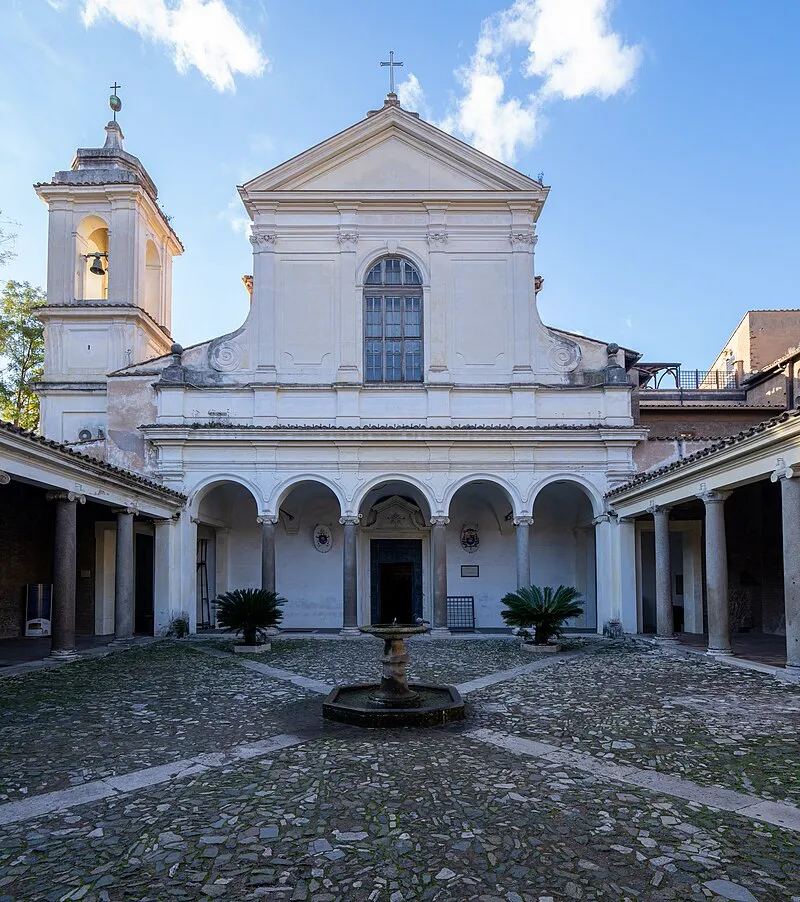
Intro TExt
Church History
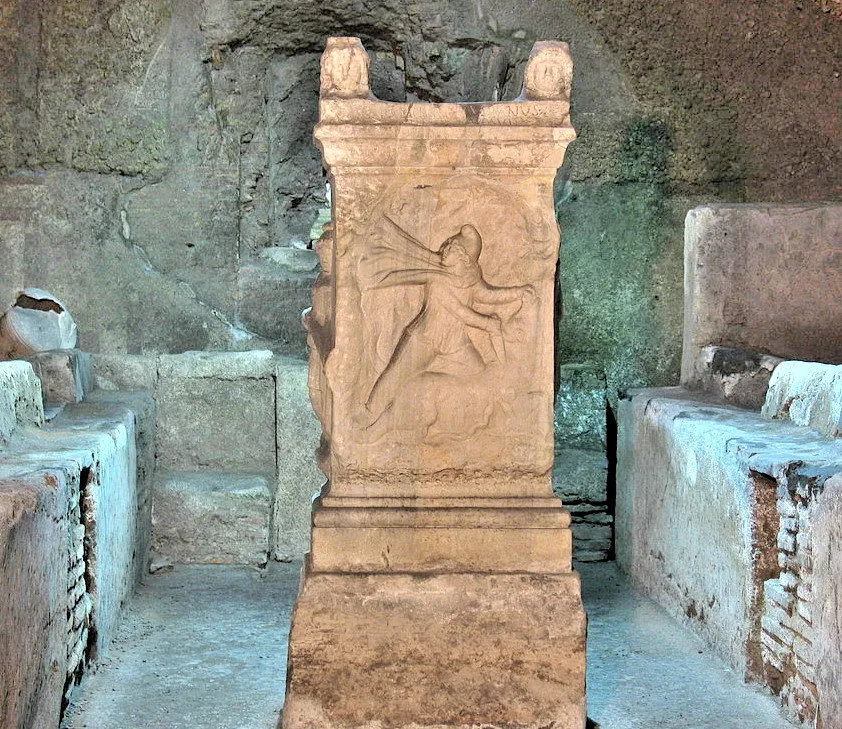
History Text
Architecture
Architecture Text
Other Information
Information
The Ancient Basilica
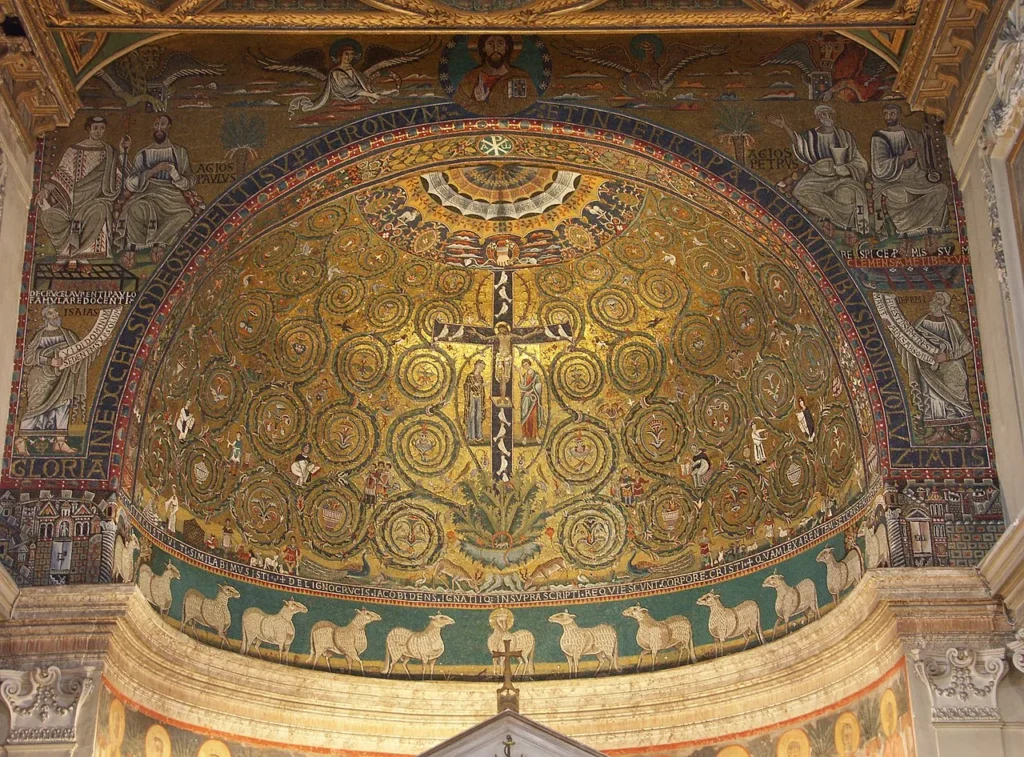
The original building on which the basilica is built dates back to around the middle of the 3rd century. The upper floor of a warehouse, known as a horreum, was demolished and replaced with a private dwelling, which some early Christian scholars believe was used for religious meetings. This building became known as the titulus Clementi. References to the church of San Clemente appear in early Christian texts, including those from Pope Zosimus and Pope Leo I, suggesting the site’s long-standing significance.
Throughout the centuries, the building underwent multiple transformations:
- In the 4th century, it was adapted into a Christian basilica with a central nave and two side naves.
- By the early 5th century, an apse was added, occupying part of the upper Mithraeum building.
- In the 6th century, an altar and schola cantorum were established, along with a new floral mosaic floor, much of which remains visible today.
- Between the 8th and 9th centuries, marble columns were inserted, and frescoes were added.
- Following the fire caused by the sacking of Rome by the Norman troops in the 11th century, the southern colonnade and narthex were reinforced and covered with new frescoes.
The lower basilica contains murals depicting significant events, such as the Death and Recognition of Saint Alexis, from the end of the 11th century. One of the frescoes illustrates a miracle attributed to Saint Clement, in which a prefect named Sisinnius is struck blind after attempting to arrest Clement and his follower Theodora.
Inscription of Saint Clement and Sisinnius
One of the most famous frescoes in the basilica depicts the interaction between Saint Clement and the prefect Sisinnius. In the fresco, Sisinnius orders his servants to arrest Saint Clement, but God causes the servants to become blind and instead drag a marble column. The fresco is notable for its inscriptions in an early form of the vernacular Italian, providing one of the first written examples of the language used in an artistic context.
The Ancient Atrium
Despite extensive excavation, there is no archaeological evidence of the existence of an atrium in front of the lower basilica. However, based on measurements and stylistic analyses, it is probable that such an atrium once existed, though its precise form cannot be definitively determined.
The Tomb of St. Cyril
Saint Cyril was buried in the Basilica of San Clemente in 869. However, after the basilica was abandoned, his remains were moved to the 12th-century upper basilica, leaving his original tomb in the early Christian basilica empty.
Roman Buildings Beneath the Basilica
Two important buildings were uncovered during excavations beneath the basilica. The first, a large rectangular structure dating back to the 1st century AD, is thought to have been a warehouse, or horreum. It consisted of two floors, with cells covered by barrel vaults, and an internal courtyard that has yet to be fully excavated. The second building, the Mithraeum, was part of a residential complex (insula) constructed in the 1st century AD. The Mithraeum, a temple dedicated to the cult of Mithras, was built between the 2nd and 3rd centuries. A statue of the Good Shepherd was discovered in the Mithraeum, indicating the religious significance of the site during Roman times.
The Medieval Prothyrum and the Clergy of San Clemente
The Titulus of San Clemente was one of the 25 Christian pastoral centers in Rome during the 3rd century, governed by cardinals. The religious community associated with the basilica is believed to have begun around 1403, when Pope Boniface IX introduced the congregation of the friars of San Ambrogio ad Nemus. The Dominicans later took over the basilica and convent in 1645, and after the expulsion of the Irish clergy from England in 1677, the Irish Dominicans assumed responsibility for the basilica, a role they continue to fulfill today. The current titular cardinal of San Clemente is Cardinal Arrigo Miglio.
Feast Day
Feast Day: 23 November
The feast day of Basilica di San Clemente al Laterano in Rome is celebrated on November 23, the same as the feast day of Saint Clement I, who is the patron saint of the basilica. This day honors Pope Clement I, who is traditionally believed to have been martyred and whose relics are housed in the basilica.
Church Mass Timing
Monday : 08.00 am , 06:30 pm
Tuesday : 08.00 am , 06:30 pm
Wednesday : 08.00 am , 06:30 pm
Thursday : 08.00 am , 06:30 pm
Friday : 08.00 am , 06:30 pm
Saturday : 08.00 am , 06:30 pm
Sunday : 09.00 am, 11.00 am, 06.30 pm
Church Opening Time:
Monday : 9:00 am–12:30 pm, 2:00 pm –5:30 pm
Tuesday : 9:00 am–12:30 pm, 2:00 pm –5:30 pm
Wednesday : 9:00 am–12:30 pm, 2:00 pm –5:30 pm
Thursday : 9:00 am–12:30 pm, 2:00 pm –5:30 pm
Friday : 9:00 am–12:30 pm, 2:00 pm –5:30 pm
Saturday : 9:00 am–12:30 pm, 2:00 pm –5:30 pm
Sunday : 12:00 pm –5:30 pm.
Contact Info
Address :
Piazza di S. Clemente, 00184 Roma RM, Italy.
Phone : +39 06 774 0021
Envelope
Dribbble
Facebook
Youtube
Instagram
Accommodations
Connectivities
Airway
Giovan Battista Pastine International Airport (CIA) Via Appia Nuova, Ciampino, to Basilica of San Clemente al Laterano Rome, Italy distance between 30 min (13.4 km) via Via Appia Nuova/SS7.
Railway
Via Labicana, 00184 Roma RM, Italy, to Basilica of San Clemente al Laterano Rome, Italy distance between 6 min (1.5 km) via Via Labicana.