


Basilica Cattedrale di Santa Maria Maggiore Civita Castellana, Italy
Introduction
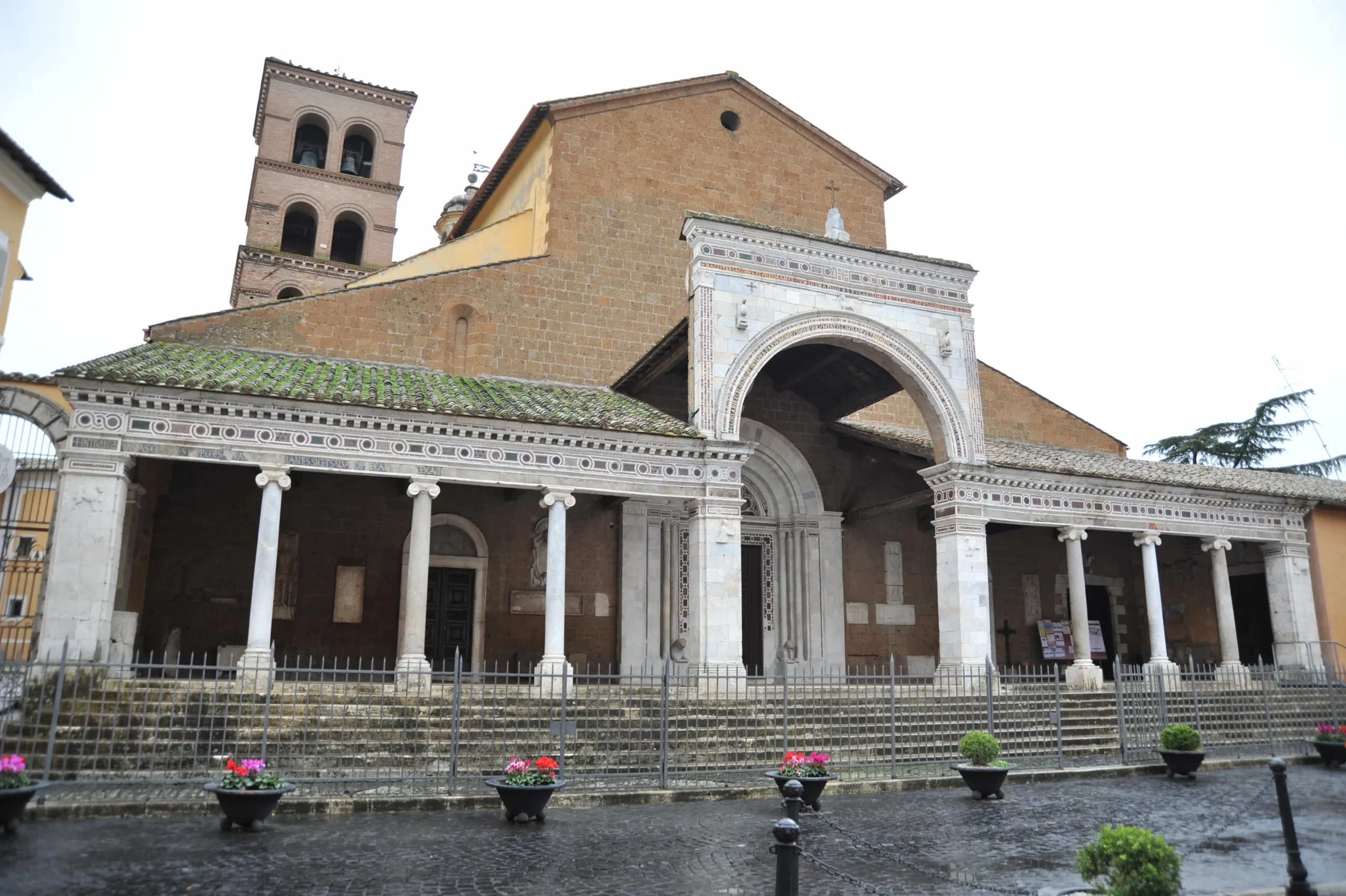
The Civita Castellana Cathedral, also known as the Cattedrale di Santa Maria Maggiore or Santa Maria di Pozzano, is a prominent religious building located in the town of Civita Castellana, situated in central Italy. This cathedral serves as the episcopal seat of the Bishop of Civita Castellana, making it a key center of the Roman Catholic Diocese of Civita Castellana. The cathedral is dedicated to the Virgin Mary, under the title of Santa Maria Maggiore, and it holds significant historical and architectural importance in the region. Its rich history dates back to the medieval period, and over the centuries, it has undergone various renovations and modifications, reflecting the evolving architectural styles of the time.
History of Basilica Cattedrale di Santa Maria Maggiore Civita Castellana, Italy
The edifice was built from around 1185, over a pre-existing church, and was completed with the construction of the portico in 1210. The latter saw the intervention of the Roman Cosmati family of architects and marble workers.
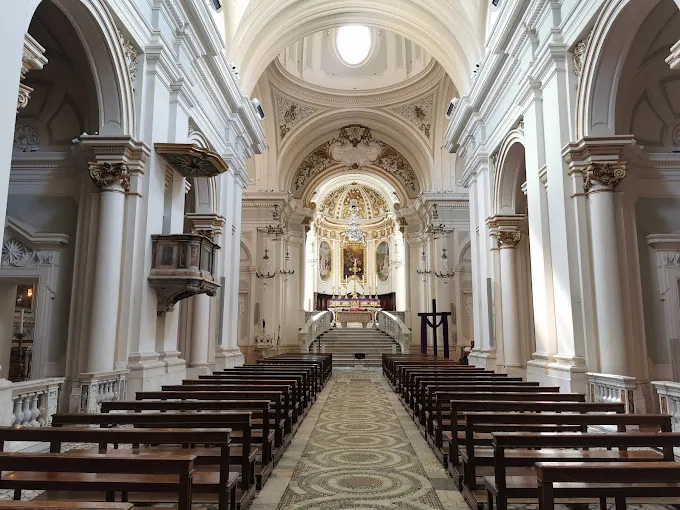
After centuries of decay, in the 18th century the church was totally restored and the interior was renovated in Baroque style. The two aisles were turned into side chapels, communicating with each other, thus keeping only a single nave. A plaque on the building’s exterior commemorates Wolfgang Amadeus Mozart’s sojourn in Civita Castellana on 17 July 1770: he also played the cathedral’s organ at Mass of that day, a Sunday.
The cathedral is the work of a famous family of Roman marble workers: the Cosmati. The Cosmati worked in corporations and operated between the 12th and 14th centuries in the Roman territory of Lazio. They developed a unitary figurative art, easy to recognize, composed of ornamental motifs and mosaics with repeated geometric figures.
Innocent III commissioned the work to Jacopo di Lorenzo and his son Cosma, asking them for particular effort and commitment. The construction had an important symbolic value for the time: the North gate in Lazio of the territorial heritage of the Holy See. The facade was intended to represent a triumph of Roman art.
In the 18th century, the church was then renovated and modified with Baroque forms, designed by Gaetano Fabrizi (between 1736 and 1740).
Architecture of Basilica Cattedrale di Santa Maria Maggiore Civita Castellana, Italy
Architectural Style : Romanesque Architecture
Exterior
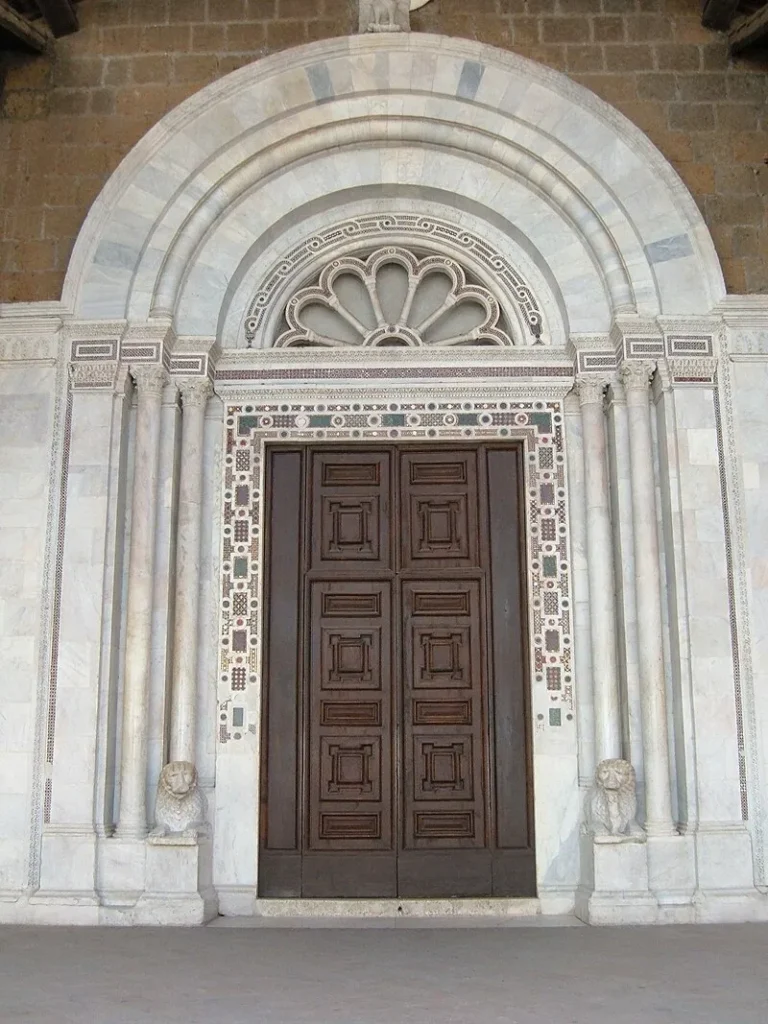
Looking out onto the cathedral square, one is struck by the slender beauty of the portico, which adorns the facade of the temple. The architrave must have been entirely occupied by a dark blue mosaic band, in which there was a gold inscription, of which only a few letters remain. On the two central pillars, there is a beautiful round arch, on whose middle band one can read, in gold mosaic: Above the arch, the attic rises clear and imposing. On the architrave, a gold and blue inscription immortalizes the names of the craftsmen: Above the four supporting pillars of the portico are depicted the symbols of the evangelists; at the center of the arch the Lamb, in the round, an image of Christ, turns its gaze toward the square. In the two triangles of the attic, two marble pelicans protrude, symbol of the Eucharist. The beautiful central door is set between four Corinthian columns, two of which rest on respective lions, lying in an act of rest, a symbol of the devil or evil: the child, placed under the lion, symbolizes the faithful entering the church, therefore it is an invitation to be vigilant over the forces of evil and to purification.
Interior
The restoration of 1736 transformed the layout of the ancient church from three naves, divided by pillars and columns, to a single nave with side chapels. The central band of the floor is composed of seventeen concentric circles, which end in the transept with a quincunx, and form a true guide for the faithful towards the altar, continuing the symbolism of the portico. Once in the transept you can admire two baroque altars, the Madonna della luce, on the right, and the Madonna del Rosario, on the left. The first work is a fresco on the wall, probably before 1200; it was discovered during the restoration of 1736. The Child holds a card in his hand on which is written: «Ego sum lux». The Madonna del Rosario, painted in oil on wood, of the Roman school, dates back to the 15th century. The Angels offer the Child two trays of fruit, below St. Dominic, with some friars and nuns. Around the table, in fifteen small paintings, the mysteries of the Rosary are depicted.
Presbytery
At the end of the presbytery there is a painting by Pietro Nelli (18th century) of the Madonna Annunziata, to whom the Cathedral is dedicated, and two frescoes depicting the resurrection of John, on the left, and the martyrdom of Saints Marciano and Giovanni, on the right. On the sides of the presbytery, above the doors of the sacristy and the oratory of the Heart of Mary, two oval frescoes representing the Holy Martyrs Gratiliano and Felicissima, by Pistrini.
The Crypt
Many hypotheses have been made about the origin of the crypt, some of which date back to the 7th – 8th century, as a pagan temple, later used by the first Christians for their worship; but the “hall” structure suggests that the 12th century is the most reliable. It was subsequently destroyed several times, as can be seen from the fragments found in nearby gardens, as well as from the columns and capitals built with various remains of the previous temple. To the left of the crypt is a marble ciborium, in which are depicted: at the top the Madonna delle Grazie with the Child, adored by two Angels, at the bottom the Patron Saints Marciano and Giovanni. The two Saints are placed on the sides of the case, in which the urn of the Relics was kept. At the bottom, the coat of arms of the Borgia family. This work was carried out by Pietro da Siena in 1482, while Rodrigo Borgia, the future Pope Alexander VI, was governor. On the right, a second ciborium depicts Christ on the Cross, near the chalice and the superimposed host; on the sides the Annunciation and the Archangel Gabriel. Lower down, near the custody of the Blessed Sacrament, four Angels with thuribles. They were originally located in the upper presbytery, from where they were removed during the restoration of 1736. On the central wall of the crypt there is a medallion in Carrara marble, depicting the Saints Gratilian and Felicissima. It was made in 1728 and placed there to replace the frescoes, which represented images of the Saints themselves. This underground was chosen as the burial place of the diocesan Bishops, as shown by the tombstones still preserved.
The Oratory of the Heart of Mary
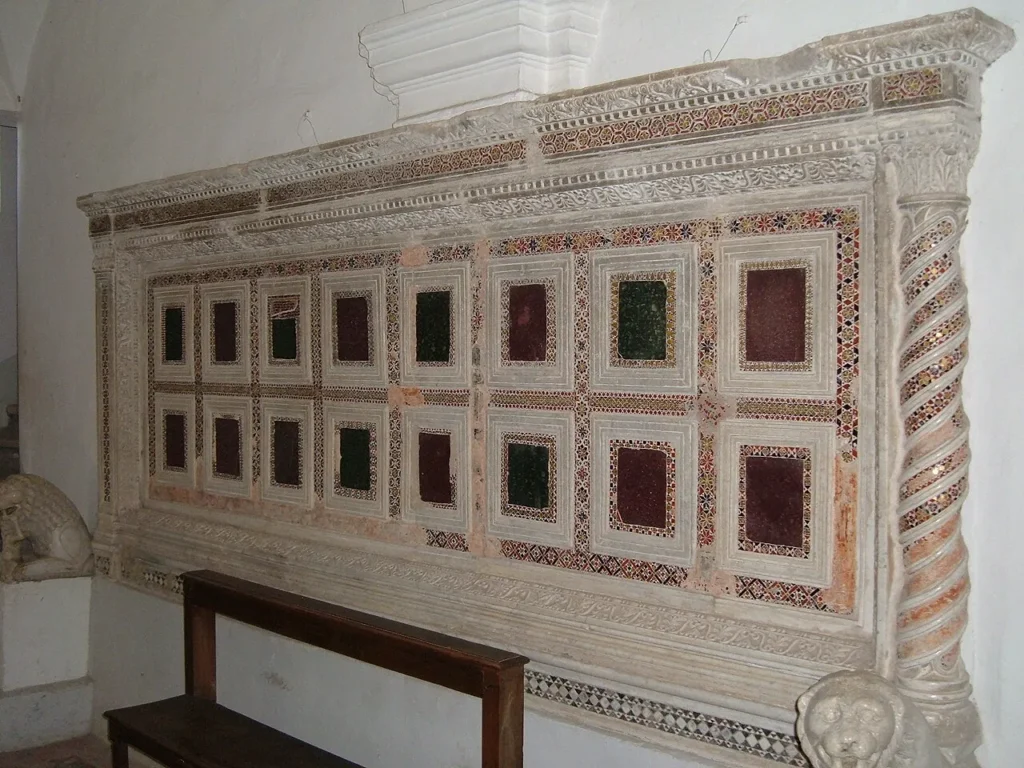
Built around the 14th century, it was originally used as a chapel, dedicated to St. John the Baptist; it preserved the baptismal font until 1700, now to the left of the central staircase. On the wall of the second bay, the front of a sarcophagus is walled in, depicting a wild boar hunting scene, perhaps from the 9th century. Above the front of the sarcophagus, a high relief depicts an Angel with open wings, holding a book in his left hand. This work also probably belonged to the primitive church, and dates back to the 10th century. Also walled in are two Cosmatesque plutei, the work of Drudo de Trivio and Luca di Cosma. They were formerly placed as a fence around the cathedral’s presbytery. They can be dated between 1231-1240. On the wall of the first bay, some frescoes depict the Madonna with Child, an Angel and some Saints; they probably date back to the 14th century.
Feast Day
Feast Day : 5th August
The Dedication of the Basilica of St Mary Major (In Dedicatione basilicae S. Mariae) is a feast day in the General Roman Calendar of the Catholic Church, optionally celebrated annually on 5 August with the rank ofmemorial.
Church Mass Timing
Monday : 5:30 PM
Tuesday : 5:30 PM
Wednesday : 5:30 PM
Thursday : 5:30 PM
Friday : 5:30 PM
Saturday : 5:30 PM
Sunday : 10:00 AM, 11:30 AM, 5:30 PM
Church Opening Time:
Monday : 8:30 am – 7:00 pm
Tuesday : 8:30 am – 7:00 pm
Wednesday : 8:30 am – 7:00 pm
Thursday : 8:30 am – 7:00 pm
Friday : 8:30 am – 7:00 pm
Saturday : 8:30 am – 7:00 pm
Sunday : 8:30 am – 7:00 pm
Contact Info
Address:
Piazza del Duomo, 01033 Civita Castellana VT, Italy.
Phone: +390761513779
Dribbble
Envelope
Facebook
Youtube
Accommodations
Connectivities
Airway
Milan Linate (LIN) to Basilica Cattedrale di Santa Maria Maggiore Civita Castellana distance between 5 hr 5 min (520.1 km) via A1.
Railway
Sorrento to Basilica Cattedrale di Santa Maria Maggiore Civita Castellana 3 hr 38 min (316.6 km) via E45.