


Begoñako Basilica, Bilbao, Spain
Introduction
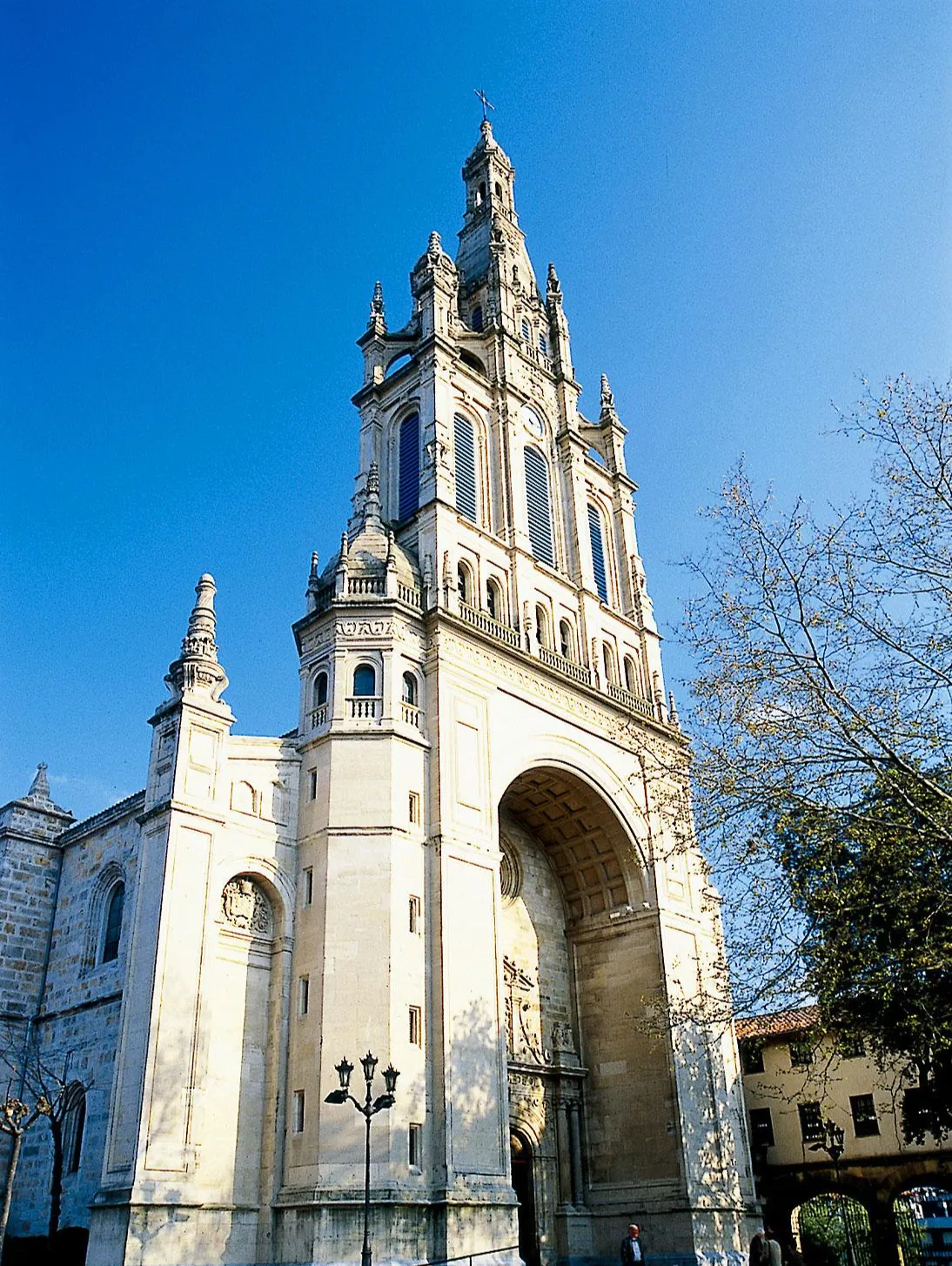
The Basilica of Begoña (or Basílica de Nuestra Señora de Begoña in Spanish) is a basilica in Bilbao, in Spain, dedicated to the patron saint of Biscay, the Virgin Begoña. It is built on the site of an old shrine where, legend has it, the Virgin Mary appeared at the beginning of the 16th century. Bilbao residents have great devotion to the Virgin of this church, “La Amatxo”. Work on this beautiful Gothic building began in 1519.
History of Begoñako Basilica, Bilbao, Spain
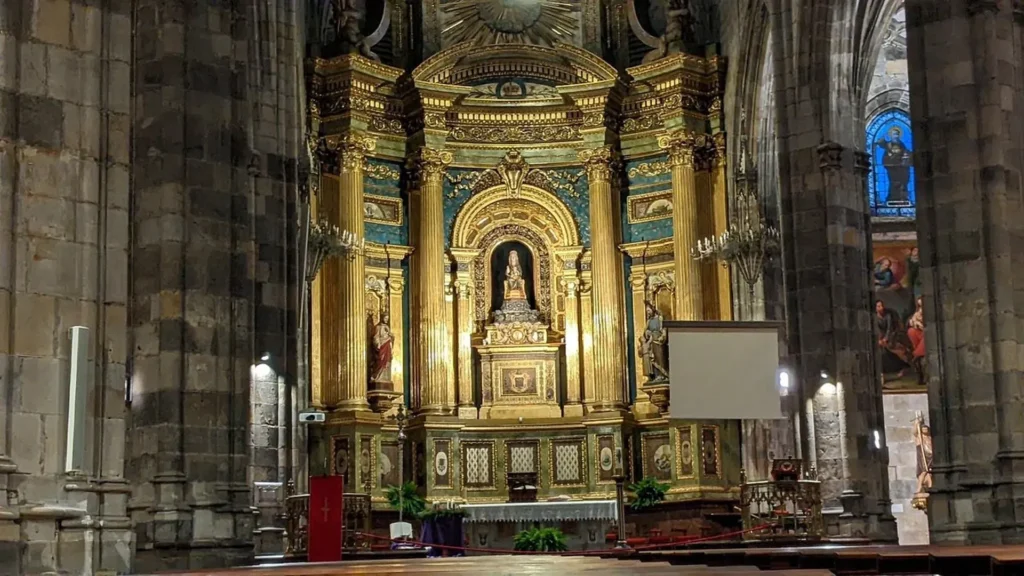
The Legend goes that, some time between the thirteenth and fourteenth centuries, a shepherd stumbled across a wooden statue of the Virgin Mary on Mount Artagan. It appeared on a holm oak tree as if it had sprouted out of the earth. As such, local people wanted to find a suitable place to build a church to venerate the miraculous image. However, according to the legend, when they tried to move it, the carving took root in the soil and a mysterious voice exclaimed “Bego oina!” or “Be still!”. Thus, the church had to be built right there, and the image, ever since known as Begoña, became the patron saint of Biscay and amatxu (meaning mother in Basque) to the people of Biscay. On this exact point today stands the Gothic Basilica of Our Lady of Begoña—built in the early sixteenth century on the site of the old wooden church—which has loomed over the city of Bilbao and the Nervión river for centuries.
The Basilica of Our Lady of Begoña is the heart of the district of Begoña, situated in the upper part of Bilbao, and is the pride and joy of the people of Biscay, who come here on 11 October every year on pilgrimage to see the virgin on the Day of Amatxu. On the Assumption of Mary, on 14 August, thousands of pilgrims, who walk to Begoña throughout the night from different points in Biscay, attend morning masses in honour of the patron saint.
This intimate relationship between the people of Biscay and the virgin even explains the origins of the basilica, which was paid for by the hand-outs of the people of Bilbao in the sixteenth century. Hence why the pillars in the main nave are not crowned by the coats of arms of distinguished families, but instead by the emblems of the merchant guilds that contributed to its construction
In the nineteenth century, the basilica was put to more military than religious use due to the various sieges that Bilbao suffered causing grave damage to the building and the collapse of the bell tower, which was to occur twice.
During Napoleon’s invasion of Spain in August 1808, French troops looted the basilica, killing the parish priest and causing heavy damage. The bell tower, by contrast, would resist until the First Carlist War. In 1835, after having been besieged throughout the summer, the liberal troops took advantage of the retreat of the Carlists to blow up the bell tower so that enemy artillery would not be able to use it again. On 15 June of the same year, the famous general Zumalacárregui was hit by a stray bullet that would end up killing him nine days later, turning the church into a place of pilgrimage for Carlists. In 1836, the liberals withstood a new attack from the Carlists, sadly burning the cabinets, floorboards and Baroque altarpiece—which would later be replaced by one of Isabelline style in 1869—as fuel.
The new tower, completed in 1850, didn’t last long as the basilica was bombarded during the Third Carlist War in 1873 and the bell tower once again fell to pieces onto the church nave. Its reconstruction in 1881 was not to be its last, as the tower that can be seen today was built by the architect José María Basterra, who erected it for the third time in the early twentieth century.
Architecture of Begoñako Basilica, Bilbao, Spain
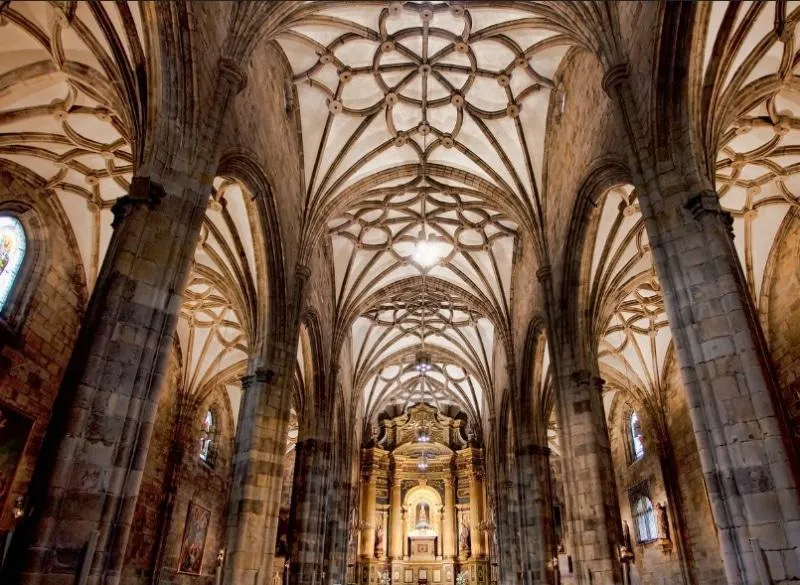
Architectural Styles: Gothic architecture, Baroque architecture
Architect: José María de Basterra
The Church is meruGothic style, designed by Sancho Martínez de Asego, diverges on the building’s magnificent façade, which instead exhibits a triumphal arch built in the Mannerist style in the mid sixteenth century. The works lasted an entire century and, as a result, the multi-coloured wood carving of the virgin was not able to take pride of place in the new church until 1603.
The People of Bilbao have always had a special relationship with Our Lady of Begoña, who they consider their guardian. Legend has it that when a catastrophe devastated the city, people would take the virgin out on procession through the streets and the floods and epidemics would subside. Seafarers returning from sea would anxiously await the bend in the river, where they would catch first sight of the bell tower of the basilica. This point is now occupied by the La Salve bridge and plaza, which owe their name to the salves, or prayers, that the fishermen made to the patron saint in thanks for having protected them on their voyage. Even now, the Athletic de Bilbao football club leave the virgin a floral offering every year, just before the start of the new season, to ask for good luck.
During the 19th century, the basilica was damaged as a result of it forming part of Bilbao’s city wall. The Carlist General Tomás de Zumalacárregui was fatally injured near the basilica. The current tower and part of the exterior were designed by José María Basterra and built between 1902 and 1907.
On 16 August 1942, an incident between Falangists and Carlists resulted in several grenades exploding near the church. Accounts differ on number of injuries and whether any were killed, but the incident highlighted dangerous rifts between Spanish nationalist factions and prompted a restructuring of Franco’s government. Six Falangists were convicted in the incident. One of them, Juan José Domínguez, was controversially sentenced to death and executed by firing squad.
Work was carried out to correct the damage, however, and from September 1993 to June 1994, extensive cleaning and restoration work was carried out on the stone and the clock face and bells were repaired. The clock tower houses 24 bells, with the heaviest weighing a tonne, and were built in Sumiswald, Switzerland. The history of the clock tower dates back to 1922, and currently, seven different melodies can be produced
The Basilica of Begoña has a rich history that dates back to the 16th century. Designed by Sancho Martínez de Arego, the basilica features a unique blend of Gothic and Renaissance architectural styles. The construction of the basilica took over a century to complete, with the addition of vaults in the 17th century.
Architectural Marvels
As you step inside the basilica, you’ll be greeted by its impressive three naves. The Gothic style dominates the interior, while the arched mid-16th century main entrance showcases a transitional style influenced by the renowned Spanish architect Gil de Hontañón. The basilica’s tower and part of the exterior were designed by José María Basterra and built between 1902 and 1907, adding a touch of modernity to the structure.
Fun Facts and Cultural Significance
The Basilica of Begoña holds cultural significance for the people of Bilbo. The “La Salve” quarter of the city derives its name from the basilica’s steeple. Sailors returning up the river Nervión, which passes through Bilbao, would spot the steeple and start praying to the Virgin Begoña, thanking her for their safe return from the sea.
The Basilica’s clock tower is another fascinating feature. It houses 24 bells, with the heaviest weighing a tonne. The clock tower’s history dates back to 1922, and it can produce seven different melodies, adding a melodic charm to the surroundings.
La Salve and The Basilica
The “La Salve” (Spanish for “salute” or “Hail Mary”) quarter of Bilbao is so named because it is the first point where sailors returning up the river Nervión, which passes through the city, were able to see the basilica’s steeple. As a result, they would start to pray to the Virgin Begoña here, thanking her for having looked after them during their time at sea.
Festivities and Celebrations
The Major festivals take place every 15 August (Assumption of Mary), and 11 October, the saint day of Begoña. Midnight mass is celebrated on these occasions, with pilgrimages taking place as locals and visitors go to worship.
According to the basilica’s website, many sailors still remember the significance of the building, with “Virgen de Begoña” or “Begoña” being popular names among fleets.
Virgin of Begoña
The image of the Virgin of Begoña is a Romanesque-Gothic sculpture from the 13th and 14th centuries. It is made of polychrome wood and is 117 cm high.
Festivities of the Virgin
Everyone knows the great devotion of Bilbao and Bizkaia to the Virgin of Begoña, whose feast day is celebrated on October 11. On this day as well as on August 15, thousands of pilgrims come to the Basilica of Begoña from all corners of Bizkaia, some walking all night, to place themselves at the feet of their Amatxu.
Once in Bilbao, from the Old Town we will go up to Begoña by the stairs of the Calzadas de Mallona. The temple remains open all night so that the pilgrims who arrive can pray the Novena and accompany the Amatxu of Begoña. In addition, masses are celebrated every hour, highlighting the High Mass at 12 noon on August 15, celebrated by the Bishop and attended by the authorities of the Town of Bilbao.
The Festive day is completed with a visit to the stalls selling souvenirs and prints of the Virgin of Begoña and replenishing energy in the txoznas where traditional txakoli, talo and classic doughnuts are served.
Church Visit
The Basilica of Begoña is open to visitors from Mondays to Saturdays, with morning and evening hours. On Sundays, the basilica is open only during mass. Whether you’re a religious pilgrim or simply interested in exploring the architectural wonders of Bilbo, a visit to the basilica is a must.
Feast Day
Feast day : 11th October
The major festivals take place every 15 August (Assumption of Mary), and 11 October, the saint day of Begoña. Midnight mass is celebrated on these occasions, with pilgrimages taking place as locals and visitors go to worship.
Church Mass Timing
Monday to Saturday : 09:00 AM (not in August), 11:00 AM, 07:00 PM
Sundays and holidays : 10:00 AM, 12:00 PM, 01:00 PM, 07:00 PM
Church Opening Time:
Monday to Saturday : 08:30 AM – 01:30 PM
05:00 PM – 08:00 PM
Sunday : 09:30 AM – 02:00 PM
05:00 PM – 08:00 PM
Contact Info
Address:
Begoñako Andra Maria Kalea,
38, 48006 Bilbo, Bizkaia, Spain
Phone : +34 944 12 70 91
Dribbble
Envelope
Instagram
Youtube
Facebook
Accommodations
Connectivities
Airway
Bilbao Airport (BIO / LEBB) to Begoñako Basilica, Bilbao, Spain Distance 11 min (9.7 km) via BI-631
Railway
Casco Viejo Railway Station to Begoñako Basilica, Bilbao, Spain Distance 12 min (3.9 km) via Lezamako Trenbide Zaharreko Bidea